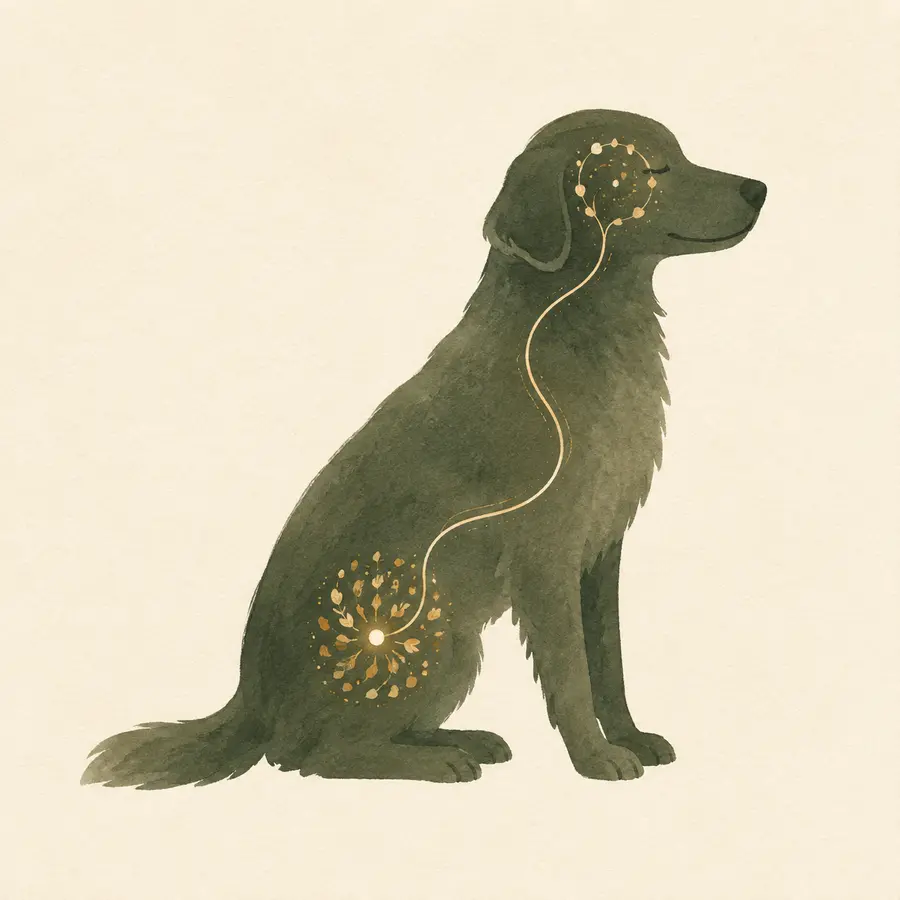
Why is a dog with a sensitive stomach or chronic digestive problems so often also restless, hypervigilant or anxious?
If you recognize this combination in your dog, it is not a coincidence. The connection between the gut and the brain, known in scientific literature as the gut-brain axis, is one of the most fascinating mechanisms in physiology.
The physiological factory of calm
About 90% of serotonin, the central neurotransmitter involved in regulating mood, overall feeling, calm and security, is produced in the digestive system by the bacterial population that inhabits the gut, the microbiome.
When the gut is inflamed, when the microbiome is overwhelmed by processed food or after repeated antibiotic use, the physiological signals traveling through the vagus nerve to the brain change entirely. The body tells the brain that it has returned to survival mode and that something inside is unsafe.
Unsettled gut → tense, vigilant nervous system → even poorer digestion.
Return calm from the gut to the mind
When we tailor clean, gentle and precise home-cooked food, the goal is not merely to balance the dog’s morning bowel movements.
We restore balance and calm to the microbiome, and from there directly to the nervous system.
One of the most moving parts of nutritional rehabilitation is seeing that, as the gut settles, the whole dog suddenly breathes a sigh of relief. The dog becomes calmer, more comfortable in their own body and able to rebuild trust in their surroundings.