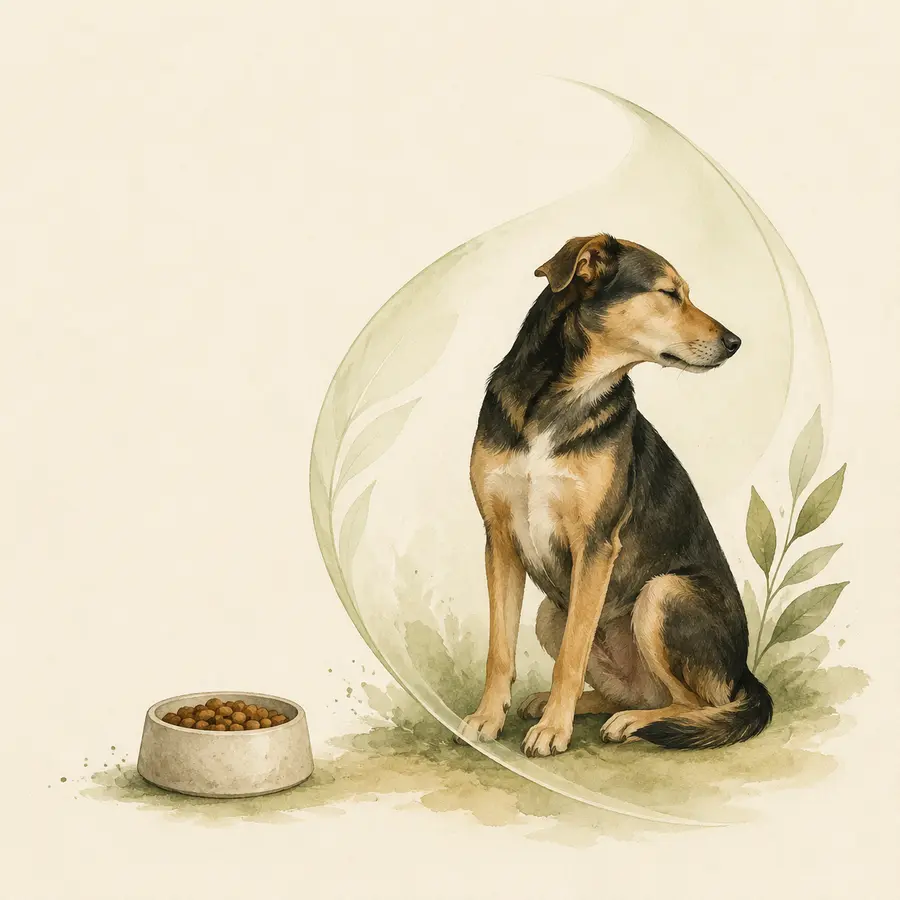
We often assume that a dog who refuses food is spoiled or picky. In practice, food refusal is frequently a physiological protective mechanism. The body is giving us information.
What is the body trying to tell us?
When a dog refuses the bowl, something in the food’s composition may be placing too much demand on the body:
- A fat or protein load that is too high for this dog.
- Carbohydrates that are difficult to digest.
- Low-quality ingredients, flavorings or by-products of high-heat processing.
The response does not need to be dramatic, like vomiting or diarrhea. It often begins as a quiet refusal. The dog eats only when extremely hungry, or shows frustration beside the bowl.