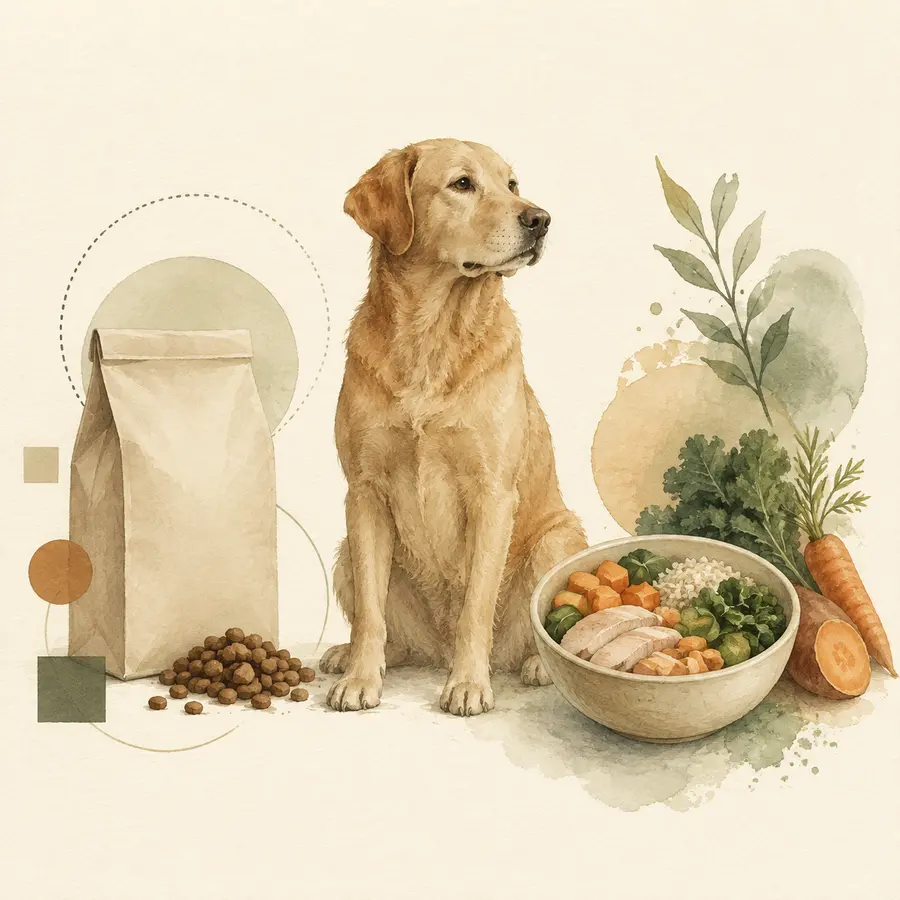
When a veterinary diagnosis arrives, such as chronic intestinal sensitivity, renal burden or a pancreatic problem, the immediate response is often a switch to a bag of “medical food.”
The intention is good, of course. The goal is to protect the affected organ and prevent deterioration.
But there is a physiological paradox worth pausing over: how is a body that currently needs deep rehabilitation, available energy and high-quality building materials supposed to recover on food that has undergone industrial processing at high heat?
Between a chemical formula and living, nourishing food
Industrial medical food is often designed around a formula intended to modify a specific blood-test marker, for example by reducing the total percentage of protein or fat.
Yet a dry formula does not always account for the biological quality of what enters the body:
- High-heat processing: destroys natural enzymes and essential nutrients.
- Isolated and synthetic ingredients: add digestive and liver work involved in waste clearance.
- Complex carbohydrates: do not always suit an existing inflammatory state in the gut.
Fresh, gently cooked protein of human-grade quality, by contrast, is processed and used by cells in a way no dry pellet can imitate. It reduces nitrogenous waste, eases the renal and hepatic burden, and gives the microbiome real fuel with which to rebuild.